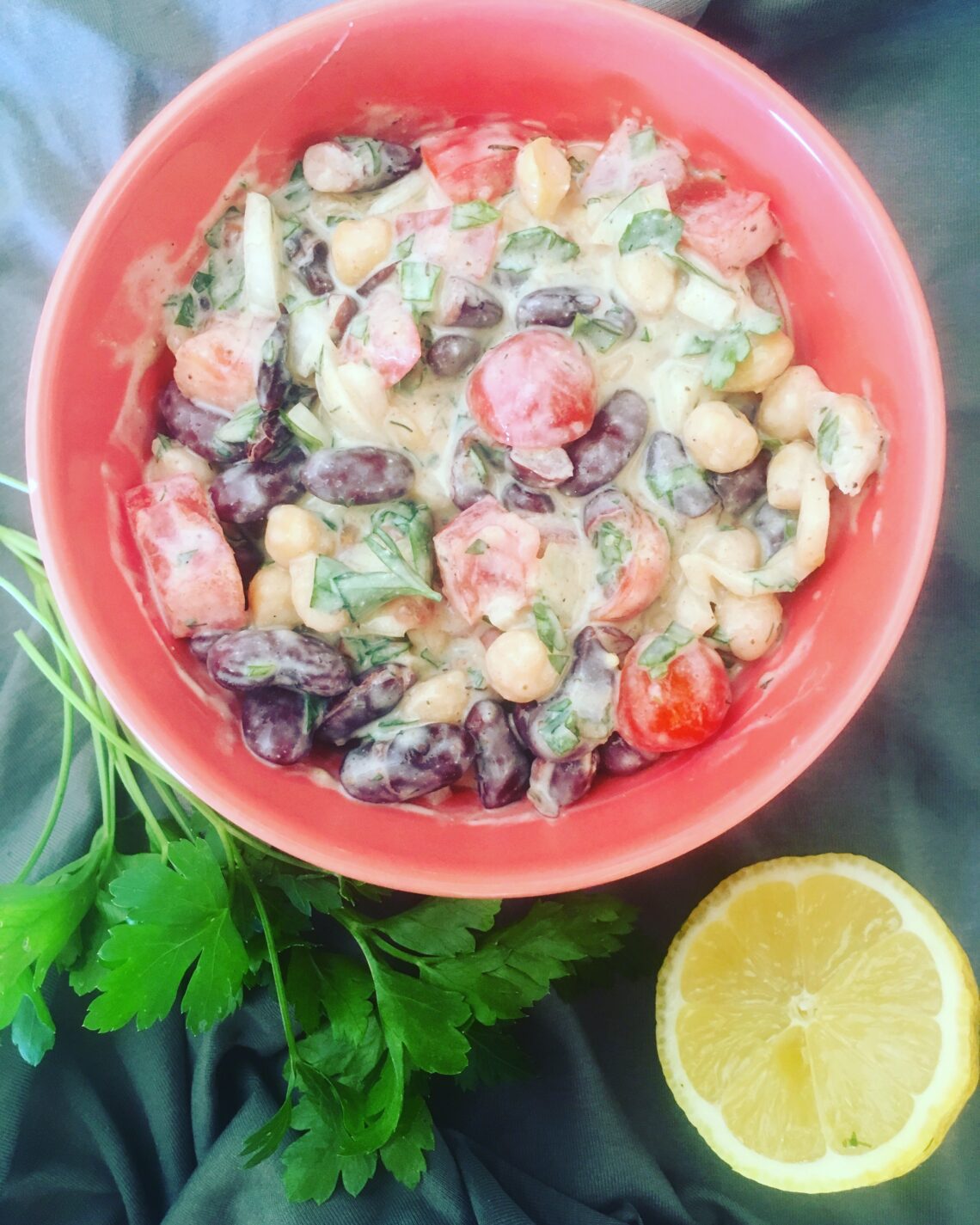
Chickpea & Kidney Bean Salad with Yogurt Dressing
Please test each unfamiliar ingredient carefully according to your dietary restrictions, even if it is labeled as suitable for your diet. Every body is different, and what I tolerate may cause reactions in you. So always listen to your body!
Before we begin, please take a moment to read the overview of the dietary restrictions for this dish. You’ll find them below the recipe.
| This recipe makes approximately 4 to 6 servings, depending on the size of the portions and whether the salad is served as a main dish or as a side. Time: 15-20 minutes Ingredients: 1 large can of chickpeas 1 large can of kidney beans 1/2 cup soy yogurt (or any yogurt of your choice) 1 garlic clove, minced 1 small onion, finely chopped 2 ripe tomatoes, diced 2-3 tsp lemon juice (adjust to taste) 1 tsp paprika powder 1/2 tsp dried dill A handful of fresh parsley, chopped Salt & pepper to taste Instructions: Prepare the beans: Drain the chickpeas and kidney beans, then rinse them thoroughly under cold water. Transfer them to a large mixing bowl. Add the tomatoes: Dice the tomatoes and add them to the bowl with the beans. Make the dressing: In a separate bowl, combine the soy yogurt, minced garlic, chopped onion, lemon juice, paprika, dill, and parsley. Stir well, then season with salt and pepper to taste. Combine everything: Pour the yogurt dressing over the beans and tomatoes. Toss gently until everything is well coated. Serve and enjoy! Feel free to adjust the seasoning to your liking, and enjoy this refreshing, protein-packed salad! Estimated Nutritional Values per Serving (for 6 servings): Calories: approx. 150-180 kcal Protein: approx. 7-9 g Fat: approx. 4-6 gSaturated fat: approx. 0.5-1 g Carbohydrates: approx. 22-24 gSugars: approx. 3-4 g Fiber: approx. 5-7 g Sodium (Salt): approx. 200-300 mg (depending on the amount of salt added) |
This recipe is suitable for several dietary restrictions and preferences, making it quite versatile. Here’s a breakdown of the main dietary categories it caters to:
Vegan
- The recipe is vegan-friendly, as it uses soy yogurt (or any plant-based yogurt) instead of dairy, and all other ingredients are plant-based.
Gluten-Free
- The recipe is naturally gluten-free, as it doesn’t contain any wheat or gluten-containing ingredients. However, make sure the yogurt and any processed ingredients (like canned beans) are labeled gluten-free if you have celiac disease or a severe gluten sensitivity.
Vegetarian
- It is vegetarian-friendly, as it doesn’t contain any meat or animal-derived products, except for the option to use dairy yogurt if preferred.
High-Protein
- The recipe is a good option for those looking for a high-protein meal, thanks to the chickpeas, kidney beans, and soy yogurt.
Low-FODMAP (Potentially)
- For individuals on a Low-FODMAP diet (such as those with IBS), this recipe can be adapted. While chickpeas and kidney beans contain FODMAPs, they can often be tolerated in small amounts. You might want to reduce the portion size or choose a FODMAP-friendly yogurt alternative to make the dish better suited to low-FODMAP needs.
Dairy-Free
- The recipe is dairy-free, as it uses plant-based yogurt instead of dairy products.
Nut-Free
- The recipe is nut-free, as it does not contain any nuts or nut-based products.
Soy-Free (If Substituted)
- If you use a non-soy yogurt (like coconut yogurt or almond yogurt), this recipe can also be soy-free. However, if using soy yogurt, it will not be suitable for those with a soy allergy.
Low-Fat (Optional)
- The recipe can be made lower in fat by using a low-fat or fat-free yogurt alternative, or by controlling the amount of oil or added fats.
Diabetic-Friendly (In Moderation)
- The recipe can be suitable for diabetics, as it is based on whole foods with a moderate glycemic index. However, individuals with diabetes should monitor the portion size, particularly of the beans, as they contain carbohydrates.
Not Suitable for:
- People with a soy allergy (unless you substitute with a soy-free yogurt).
- Those avoiding beans: Individuals who can’t tolerate beans due to sensitivities (e.g., people with certain digestive issues or a low-FODMAP diet) may need to replace the beans with another protein source.

You want to be notified when ever I upload a new recipe? Follow me on Instagram
