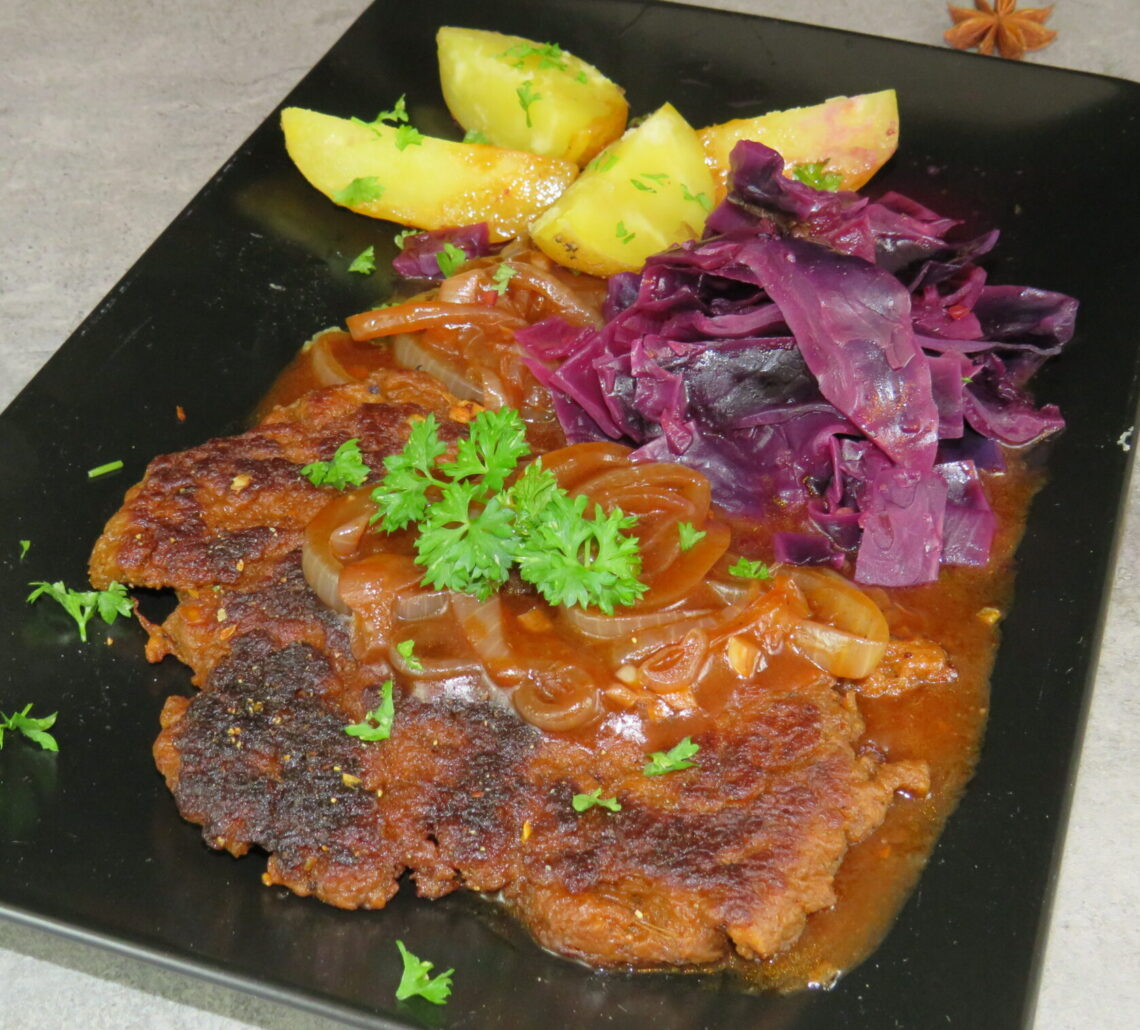
Braised Red Cabbage with Apple and Spices
Please test each unfamiliar ingredient carefully according to your dietary restrictions, even if it is labeled as suitable for your diet. Every body is different, and what I tolerate may cause reactions in you. So always listen to your body!
Before we begin, please take a moment to read the overview of the dietary restrictions for this dish. You’ll find them below the recipe.
| Time: 40-50min Servings:4-6 Portions Ingredients: 1 medium onion, diced 1 medium apple, peeled and chopped 1 cinnamon stick 4 star anise 8 whole cloves 1 bay leaf 8 whole black peppercorns 200 ml pure apple juice 200 ml pure redcurrant juice 2 tbsp vegetable broth powder (use histamine-free if needed) 1 medium head of red cabbage, shredded 2-3 tsp salt Olive oil for sautéing Instructions: Prepare the ingredients: Dice the onion, chop the apple, and shred the cabbage. Sauté the aromatics: In a large pan, heat a little olive oil over medium heat. Add the diced onion and sauté until softened. Stir in the apple, cinnamon stick, star anise, cloves, bay leaf, and peppercorns, and cook for another 2-3 minutes. (Optional: To make the spices easier to remove later, you can place them in a small muslin bag or tea infuser before adding them to the pan. If you prefer stronger spice flavors, dry-toast the whole spices in a separate pan before adding them.) Add liquids and cabbage: Stir in the shredded cabbage, apple juice, redcurrant juice, and vegetable broth powder. Mix well. Cook the cabbage: Cover the pan with a lid and simmer on low to medium heat for 20-40 minutes, stirring occasionally, until the cabbage is tender and fully cooked. Add salt to taste. Serve: Once the cabbage is done, serve it hot alongside boiled potatoes or your favorite side dish. Estimated Nutritional Values per Serving (4 Servings): Calories: ~90-120 kcal Protein: ~1.5 g Fat: ~4-5 g (depending on how much oil is used for sautéing)Saturated fat: ~0.5-1 g Carbohydrates: ~20-25 gSugars: ~12-15 g (mainly from apple juice, apples, and redcurrant juice) Fiber: ~4-6 g Sodium: ~500-800 mg (varies depending on the amount of salt and broth powder used) Vitamin C: ~20-25 mg (from the cabbage and juices) Potassium: ~200-250 mg |
This recipe is quite versatile and can fit into several dietary restrictions with some minor adjustments. Here’s an overview of its suitability:
Suitable for the following diets:
Vegetarian:
- The recipe is naturally vegetarian as it uses plant-based ingredients (no meat, poultry, or fish).
Vegan:
- It’s also vegan as written, provided you use a vegetable broth that’s free of animal products (some broths may contain dairy or meat-derived ingredients). Make sure the vegetable broth powder is vegan-friendly.
Gluten-Free:
- This recipe is naturally gluten-free, as it doesn’t include any wheat or gluten-containing ingredients. However, check the vegetable broth powder to ensure it’s gluten-free, as some might contain gluten as a stabilizer.
Dairy-Free:
- It’s dairy-free, with no milk, butter, or cheese in the ingredients. You can use a plant-based oil like olive oil for sautéing.
Low Histamine (with adjustments):
- Histamine-sensitive individuals can still enjoy this dish, but they should ensure the apple juice and redcurrant juice are fresh and low in histamine. The vegetable broth should also be histamine-free. Using fresh cabbage (not aged) and avoiding any aged spices or broths will also make the dish more histamine-friendly.
- If you have a more severe histamine intolerance, you might want to avoid or substitute certain spices (like cloves or star anise) that could potentially be problematic. You can also choose to cook the spices separately in a tea bag and leave them out if sensitivity is high.
Low FODMAP (with adjustments):
- The recipe includes onions and garlic (if any broth contains garlic), both of which are high in FODMAPs. For a low FODMAP version:
- Replace the onion with the green tops of spring onions (green parts only) or chives.
- Ensure that the broth powder is free from onion or garlic ingredients.
Paleo (with adjustments):
- The recipe is close to being paleo-friendly, but it contains apple juice and redcurrant juice, which might not be strictly “paleo” depending on the level of processing. You could substitute the juices with fresh fruit puree or a smaller amount of unsweetened fruit juice to make it closer to the paleo guidelines.
Whole30 (with adjustments):
- Whole30 requires avoiding all added sugars, so you would need to avoid the apple juice or redcurrant juice unless it’s 100% pure and unsweetened (without any added sweeteners). You could also use fresh fruit and modify the liquids to suit Whole30 guidelines.
Not Suitable for the Following (without modifications):
Low-Carb or Keto:
- The recipe contains apple juice and redcurrant juice, which are higher in sugar and carbohydrates. If you’re following a strict low-carb or keto diet, these juices might be too high in sugar. You could potentially replace the juices with a small amount of unsweetened, low-carb liquid like vegetable broth, or a sugar-free cranberry juice.
Diabetic Diet (depending on blood sugar management):
- Since the recipe contains fruit juices that are naturally high in sugars, it may cause a rise in blood sugar. For diabetic individuals, it’s best to monitor portion sizes and consider substituting the apple and redcurrant juice with lower glycemic options.

You want to be notified when ever I upload a new recipe? Follow me on Instagram

